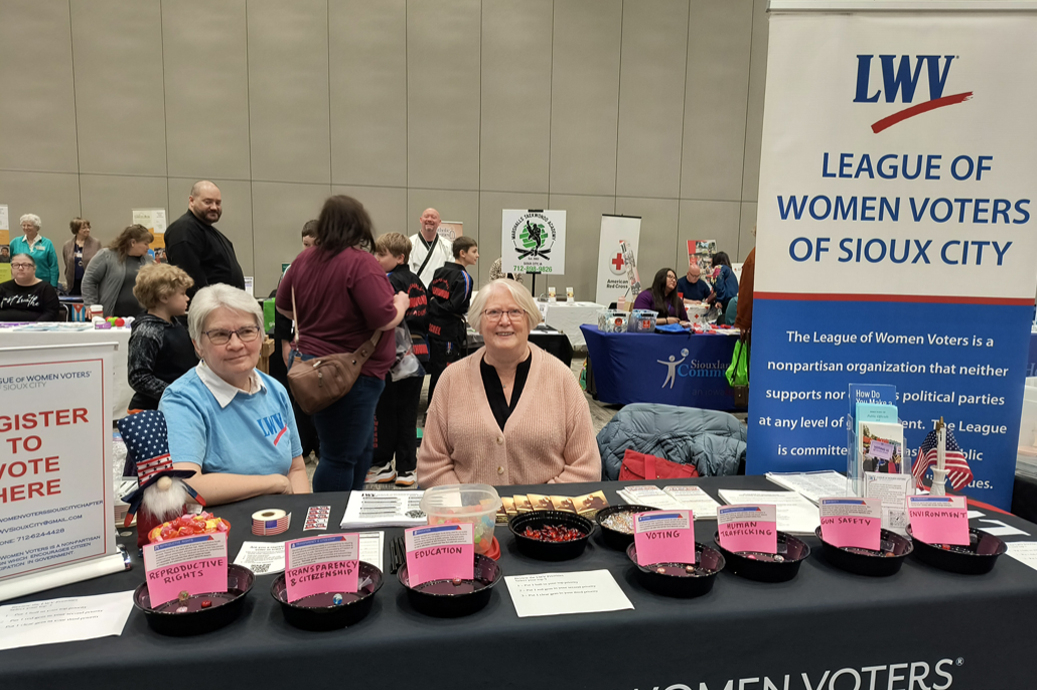
About LWV of Sioux City
League of Women Voters of Sioux City – Timeline
1920 – The Sioux City and Woodbury County League of Women Voters was founded shortly after the National LWV (Feb. 15, 1920), led nationally by Carrie Chapman Catt of Iowa. The focus was on “Citizen Academies” to educate new voters.
1924–1940 – Sioux City Public Museum holds programs and materials documenting League activities.
1930s–1940s – Shift toward study of world and public issues leading into WWII.
1943 – The Local League was disbanded during World War II.
1949 – League reorganized after the war.
1950s–Present – Strong advocacy for the Council/Manager form of city government; ongoing campaigns to protect and maintain this system.
1970s - Active involvement in the Perry Creek Flood Control Project, celebrating completion in the early 2000s.
1974 – Men joined the League of Women Voters (LWV) as full members following a vote by the organization to end its policy of barring them from full participation.
1980s – Initiated Town Hall Forums with local legislators during legislative sessions.
1990s –
- Helped establish Sioux City Juvenile Detention Center
- Supported a one-cent local option sales tax for schools.
1990–1991 – Founded Siouxland Recycles, starting with a volunteer-run trailer collection; the city later adopted the program.
1998 – Led successful campaign to add “women” to the Iowa Constitution’s equality clause.
2000 –
- Began including the Sioux City Mayor’s Youth Commission in candidate forums.
- Hosted a public forum with student panelists that led to the creation of Cook Park Skate Park.
2004 – Hosted League of Women Voters of Iowa State Convention.
2015 – Pastor David Halaas was elected our first male president.
Present:
- Sponsor/co-sponsor nonpartisan candidate forums at state and local levels of government.
- Sponsor/co-sponsor Legislator Townhalls during each year's legislative session.
- Organize numerous community voter registration opportunities.
- Attend Federal Court House Naturalization Ceremonies, formally welcome new citizens, and register them to vote.
- Conduct local and state issue studies that include community forums on topics such as child care, health care, education funding, juvenile justice, mental health, and the judicial system.
- Organize presentations on environmental issues, including water quality, light pollution, farming practices, Monarch butterfly migration, and the bee industry.